
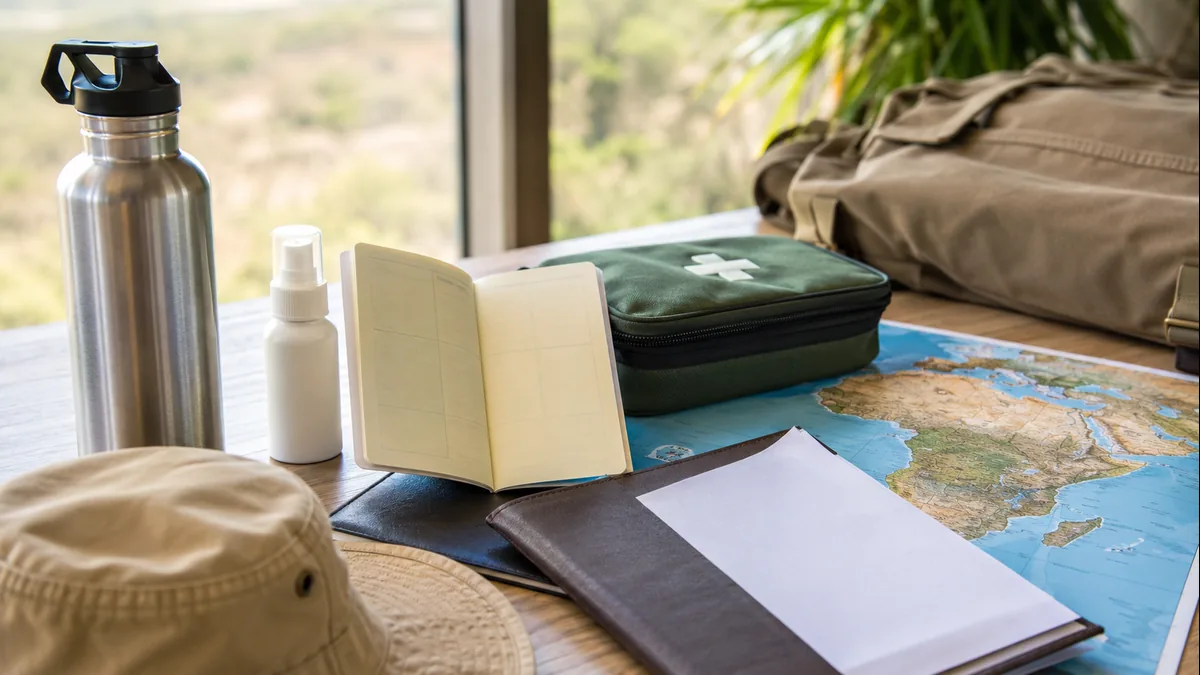
Conditions differ among Africa’s 54 countries and can change. Use this guide as a planning framework, then verify rules for the exact destination, route and date.
Arrange a pre-travel medical consultation
Seek destination-specific advice from a qualified travel-health professional well before departure. Recommendations depend on the country, transit route, age, health, trip length, rural exposure and planned activities. This guide cannot diagnose a condition or prescribe medication.
Take an itinerary and vaccination history to the appointment; multi-country travel may change the advice.
Vaccinations and yellow-fever documentation
Routine and destination-specific recommendations are separate from entry requirements. A yellow-fever vaccine may be recommended for personal protection, required by the destination, or required only after transit through a risk country.
Check the destination authority and transit rules for the traveller’s exact route. Carry the original certificate when required.
Malaria and mosquito-borne disease
Risk varies by location, altitude and season. Reduce bites with an effective repellent, long clothing at active times, intact screens or bed nets and air-conditioned rooms where available. Discuss preventive medication with a professional.
Fever during or after travel needs prompt medical attention; tell the clinician where and when you travelled.
Food, water, heat and altitude
Water quality differs by place. Prefer sealed bottled or properly treated water where safety is uncertain, wash hands and choose freshly cooked food stored safely. Build hydration, shade and rest into hot-day plans.
For highland and mountain routes, ascend gradually and learn warning symptoms before travel. Do not push through serious heat or altitude symptoms.
Insurance, medicines and emergency preparation
Review cover for treatment, evacuation, repatriation, cancellation, safari activities, trekking altitude, diving and pre-existing conditions. Carry medicines in original packaging with prescriptions and a doctor’s letter where appropriate; verify import restrictions.
Save insurer, embassy, accommodation and local emergency contacts. Keep document copies and accessible emergency funds.
Planning comparison
| Preparation | Why it matters | Action |
|---|---|---|
| Travel-health visit | Advice depends on route and traveller | Book early with itinerary and records |
| Insurance | Evacuation can be expensive | Check activities, territory and exclusions |
| Medicines | Import rules vary | Keep original packaging and documents |
| Emergency file | Connectivity may fail | Store printed and offline copies |
Related Africa travel guides
Official sources and further information
For binding or time-sensitive information, consult the exact destination’s official authorities:
- National immigration authority or foreign ministry for entry and legal rules
- National tourism authority for licensed services and visitor information
- National meteorological service for current weather and seasonal hazards
- Ministry of health or recognised public-health authority for health requirements
- Your embassy or consulate for destination-specific travel advice
Frequently asked questions
Which vaccines do I need?
Requirements and recommendations depend on your route and health. Consult a qualified travel-health professional.
Is yellow-fever proof always required?
No. Rules vary by destination and transit history; check the relevant authority.
What insurance cover matters?
Medical treatment, evacuation, repatriation and every planned high-risk activity.
Private-service disclosure: AfricaTourVisa provides private travel and visa support. It is not an embassy or government authority. Eligibility, government fees and entry decisions remain with the relevant national authority.