
Conditions differ among Africa’s 54 countries and can change. Use this guide as a planning framework, then verify rules for the exact destination, route and date.
Africa has many climate zones
Mediterranean coasts, deserts, the Sahel, tropical forests, savannahs, highlands, temperate southern regions and islands do not share one season. Rainfall timing also changes by latitude and region.
Use a national meteorological service and destination-level forecast, then check elevation and activity conditions.
Wet and dry seasons
A dry season may improve road access and wildlife viewing in one region, while a green or shoulder season offers landscapes, birds and lower demand. Rain can be brief and intense or prolonged; seasonal flooding may close roads.
Build flexibility into transfers and avoid relying on a generic ‘best time for Africa.’
Safari, beach and desert packing
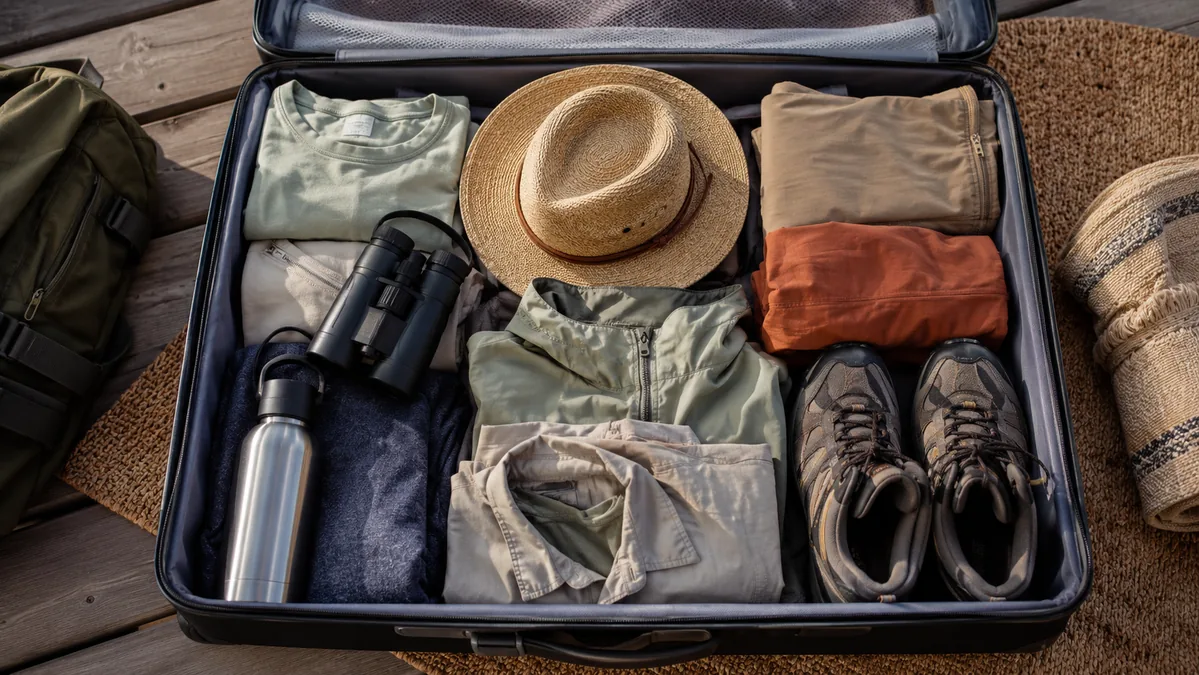
For safari, pack neutral layers, closed shoes, sun protection, binoculars, dust protection and a small day bag. For coasts and islands, add swimwear, waterproof storage, insect protection and modest clothing beyond resorts.
Desert days and nights can differ sharply. Carry layers, sun and dust protection and adequate water under local guidance.
Mountain, city and business travel
Mountain routes need proper footwear, warm layers, rain protection and altitude planning. City and business trips benefit from smart clothing, a secure day bag, charging equipment, adapters and backup connectivity.
Check airline and trekking-operator baggage restrictions before choosing equipment.
Documents and rainy-season essentials
Keep passport, visa, insurance, vaccination evidence, bookings, prescriptions, copies and emergency details in protected storage. During rainy travel, add a pack cover, waterproof footwear and quick-drying layers.
Do not pack irreplaceable documents only in checked luggage. Keep essential medication in hand baggage within airline rules.
Planning comparison
| Trip setting | Core items | Extra check |
|---|---|---|
| Safari | Neutral layers, closed shoes, sun and dust protection | Vehicle baggage limit |
| Coast/island | Light clothing, waterproof bag, insect protection | Local modesty and marine rules |
| Mountain | Warm layers, rain shell, suitable boots | Altitude and operator equipment |
| Rainy season | Quick-dry clothing and waterproof storage | Road access and delay margin |
Related Africa travel guides
Official sources and further information
For binding or time-sensitive information, consult the exact destination’s official authorities:
- National immigration authority or foreign ministry for entry and legal rules
- National tourism authority for licensed services and visitor information
- National meteorological service for current weather and seasonal hazards
- Ministry of health or recognised public-health authority for health requirements
- Your embassy or consulate for destination-specific travel advice
Frequently asked questions
What is the best season for Africa?
There is no single best season; select the destination and activity, then check its local climate.
Should I pack only light clothing?
No. Highlands, deserts, game drives and air-conditioned spaces can be cold.
What belongs in hand luggage?
Essential documents, medicines, a change of clothing and items that cannot be replaced quickly.
Private-service disclosure: AfricaTourVisa provides private travel and visa support. It is not an embassy or government authority. Eligibility, government fees and entry decisions remain with the relevant national authority.